


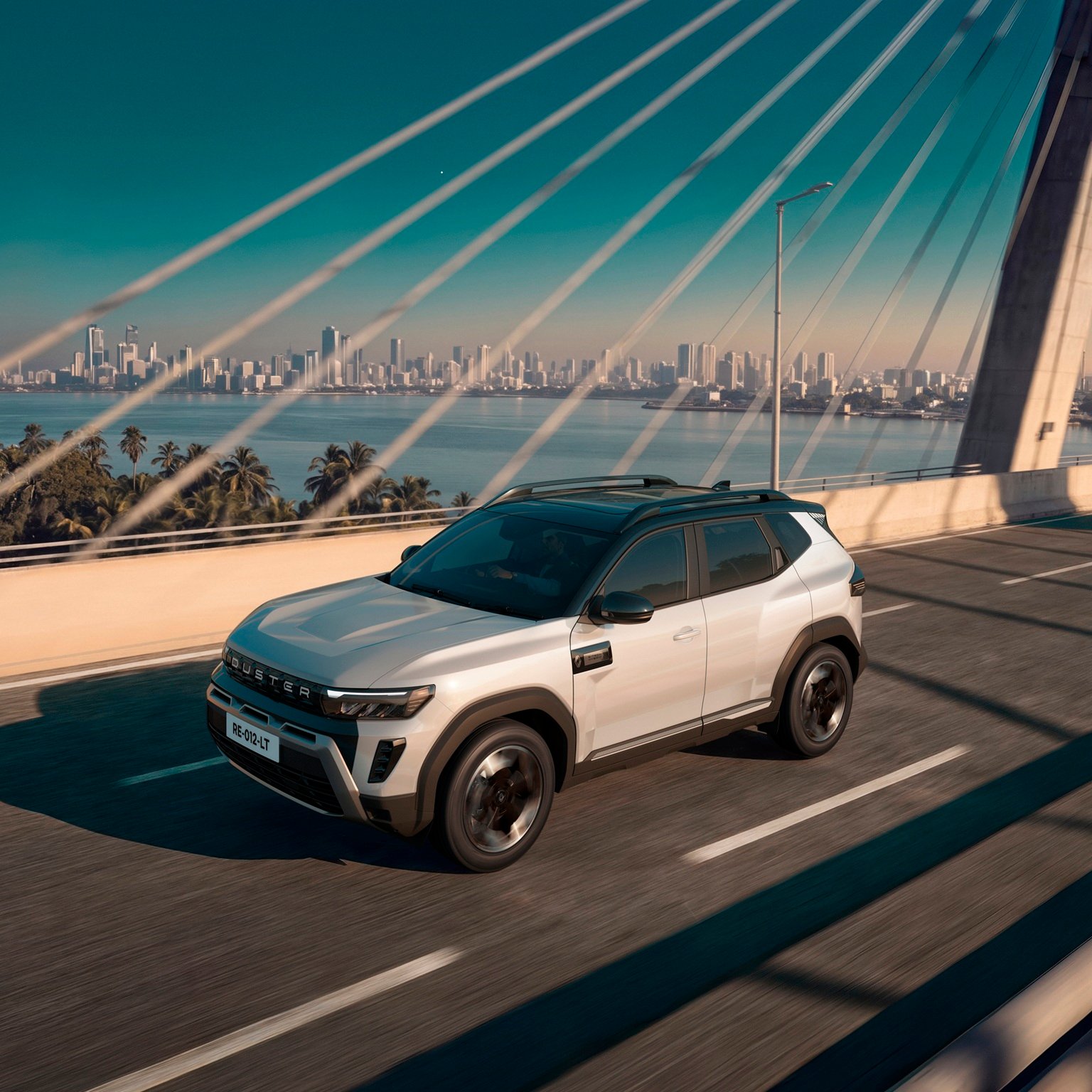
Renault India is planning to expand the powertrain portfolio of the Duster by developing a localized, port-injected derivative of its existing 1.3-litre direct-injection turbo-petrol motor. The Duster’s initial return to the Indian market experienced some early volume stagnation and slow traction, largely driven by a staggered launch strategy where strong-hybrid variants arrived nearly six months after the initial rollout rather than deploying a multi-powertrain offensive on day one. However, early retail traction and an encouraging order bank for the Duster E-Tech hybrid have strongly validated that mid-size SUV buyers demand diverse mechanical choices, prompting Renault to aggressively course-correct and fill the gap at the lower end of the range.
The carmaker now is actively working on a new 1.3-litre Multi-Point Fuel Injection (MPFi) turbocharged engine designed to offer a significantly more affordable alternative to the expensive Gasoline Direct Injection (TGDi) variant. By adopting this simpler fueling setup, Renault is expected to price the MPFi variants roughly Rs. 1 lakh to Rs. 1.5 lakh lower than equivalent TGDi models, substantially reducing the entry price point for the 1.3 turbo family. This upcoming powerplant is a direct derivative of the existing 1.3-litre HR13 four-cylinder turbo-petrol engine, with the primary engineering modification involving the removal of the high-pressure fuel rail, complex injectors, and dual-mass flywheel in favor of traditional port injection to radically slash production costs and completely eliminate the costly Gasoline Particulate Filter.
The new MPFi engine is also slated to feature a redesigned turbocharger optimized for low-end tractability to resolve the noticeable turbo-lag characteristic of the current 1.3 TGDi motor, making it better suited for stop-and-go Indian urban traffic rather than being heavily skewed toward European highway conditions. While the shift from direct to port injection will likely decrease peak power and torque outputs from the TGDi’s 163hp and 280Nm down to an anticipated 140hp and 250Nm, the MPFi architecture uniquely unlocks the capability for factory-fitted CNG compatibility since the underlying CMF-B platform is already engineered to package CNG tanks, allowing Renault to tap into unexploited customer demographics amid a surge in bi-fuel demand.
This powertrain project is being spearheaded independently by Renault’s India R&D team, leveraging the engineering capabilities of the Renault Nissan Technology & Business Centre India in Chennai to rapidly design and tailor local options. Ultimately, while a broader engine lineup and the upcoming hybrid will bolster showroom appeal, Renault India will simultaneously need to revitalize its dealer network and upgrade the overall customer ownership experience to sustain long-term sales momentum against deeply entrenched rivals.
Source: AutocarIndia
We at ThrustZone believe that the CNG could come with a manual and the same normal turbo petrol engine could be offered with an affordable/different automatic too. The third powertrain could be an EV Duster that could take on its rival from Korea head on, very easily too! The Bridger which is set to come will come with more locally made European powertrain which makes things at Renault all exciting just like it was back in the day at Renault India!

