


In Mumbai, traffic congestion is a daily challenge for millions, despite major investments in public transport, including an expanded metro network. According to the TomTom Traffic Index, Mumbai commuters lose an estimated 126 hours on average a year to traffic congestion, while a study by Boston Consulting Group estimated the annual economic cost of congestion across four major Indian cities at USD 22 billion.
Yet Mumbai has a vast, largely untapped transport resource: the waterways surrounding the city.
Now, under the leadership of Hon’ble Chief Minister of Maharashtra, Shri Devendra Fadnavis, Maharashtra continues to strengthen its position as a leader in advanced maritime technologies and sustainable water transportation.
In a milestone for the city, Swedish marine technology company Candela has brought the world’s first electric hydrofoil ferry, the Candela P-12, to Mumbai, where it will showcase how the city’s waterways can be unlocked for high-speed electric transport.
The arrival of the first Candela P-12 vessel is the successful outcome of an official delegation visit led by Hon’ble Minister of Ports Shri Nitesh Rane, to Sweden in October 2025.
During the delegation visit, the minister initiated strategic discussions aimed at strengthening maritime cooperation between Maharashtra and Sweden, particularly in electric vessels. The minister also experienced the Candela P-12 on Stockholm’s waterways, where it has been successfully integrated into the public transport system, and demonstrated its ability to halve commute times. Thanks to its minimal wake, the P-12 has been granted an exemption from speed restrictions in urban waters, allowing it to travel significantly faster than conventional vessels.
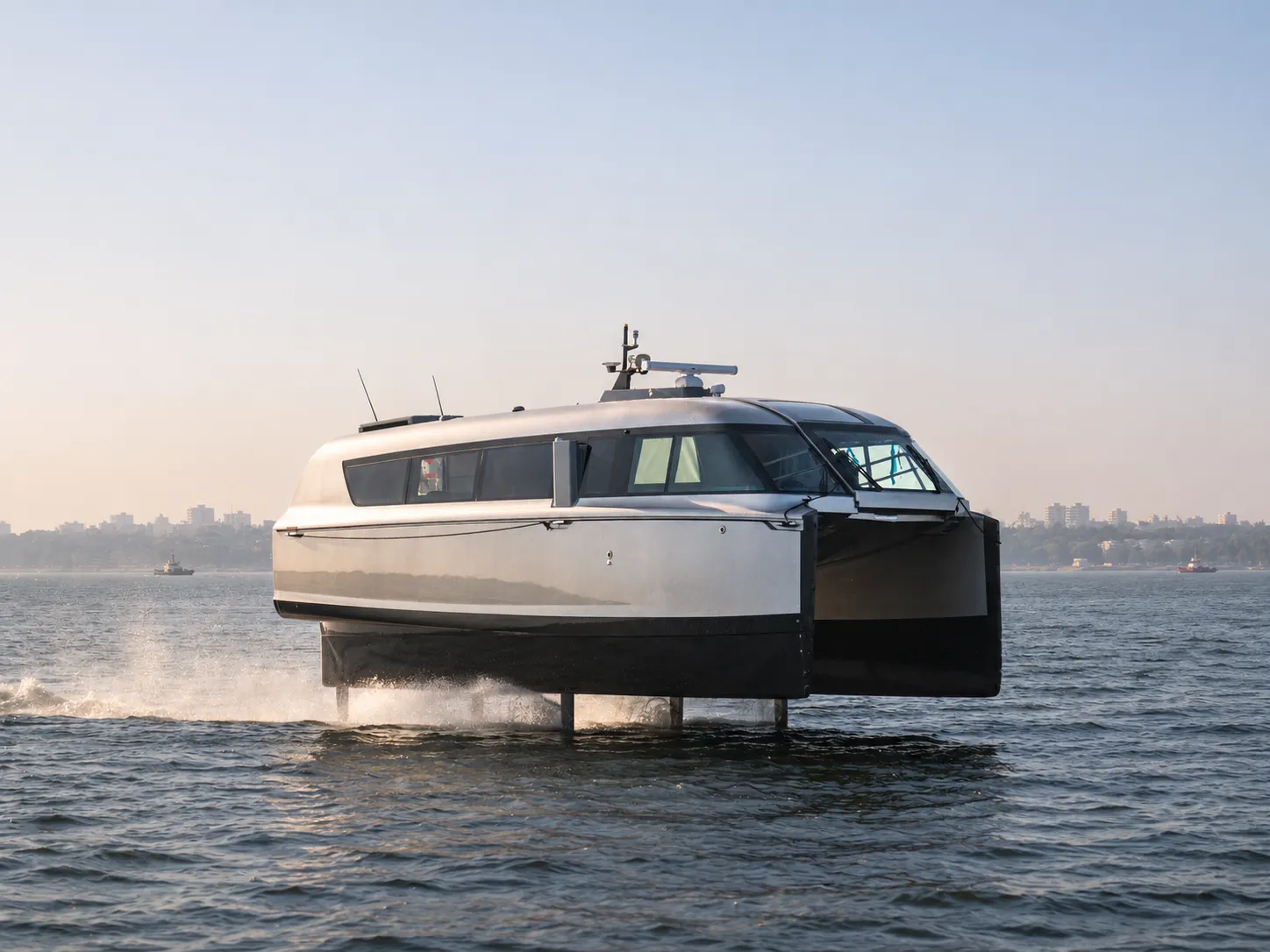
The world’s fastest and most energy-efficient electric passenger vessel, the Candela P-12 flies above the water on computer-controlled underwater wings, known as hydrofoils. By lifting the hull out of the water, the ferry reduces energy consumption by 80% compared to conventional vessels, enabling a service speed of 25 knots (46 km/h) – significantly faster than conventional electric ferries – while dramatically reducing operating costs compared to fossil-fuel-powered vessels.
“Mumbai spearheads the opportunity to turn its waterways into highways for fast, sustainable transport. With the P-12, we can connect destinations across the city in a fraction of the time it takes by road, without adding to congestion or air pollution. The ministers support to harness this infrastrucuture with new technology is an inspiration for the world,” says Sofia Graflund, CEO of Candela.
Turning Mumbai’s waterways into green highways
Journeys from the Gateway of India to Navi Mumbai International Airport, which can take up to two hours by road in heavy traffic, can be transformed by a P-12 ferry service crossing Mumbai Harbour in just 30 minutes. Other connections that will be explored include Elephanta Island, Alibaug and commuter routes linking South Mumbai with Navi Mumbai.
The P-12 platform can accommodate up to 30 passengers and is designed for frequent departures and rapid charging without heavy investments in infrastructure, as it charges from a conventional car charger. Its hydrofoil technology also significantly reduces the impact of waves on passengers, providing a smoother and safe ride even in choppy conditions.
The Candela P-12 will be available for media demonstrations starting on November 30. Among those attending will also be representatives of the vessel’s owners, Rural Enhancers Group (REL) and Sadhav Shipyards Limited, led by Mr. Ambar Ayade, Managing Director & CEO of Rural Enhancers Group, and Mr. Vedant Choudhari, Managing Director & CEO of Sadhav Shipyards Limited.
“We are proud to be part of this landmark initiative to unlock Mumbai’s waterways for a new generation of fast, sustainable transport. By bringing this groundbreaking technology to Mumbai, we aim to demonstrate how electric hydrofoil ferries can dramatically reduce travel times, improve connectivity and offer a cleaner, more efficient alternative to congested roads. We see enormous potential for this technology to transform waterborne transport, not just in Mumbai but across India,” said Ambar Ayade and Vedant Choudhari in a joint statement.

