


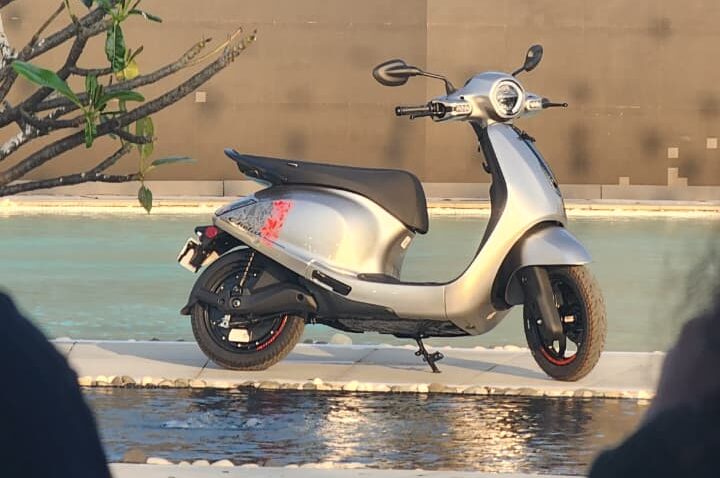
Delhi will stop registering new petrol motorcycles and scooters, allowing only electric two-wheelers under its EV Policy 2.0. This puts the city’s largest vehicle segment at the center of its clean‑air strategy and sets a high‑stakes test for India’s wider mobility ecosystem.
Two‑wheelers dominate Delhi’s roads and contribute heavily to tailpipe emissions, so the 2028 ban is expected to significantly cut urban pollution, but only if charging infrastructure, grid capacity, and affordable clean‑fuel alternatives keep pace with the policy timeline.
Mr. Akshit Bansal, Founder & CEO, Statiq, said, “Delhi’s 2028 ICE two-wheeler ban is a huge jump for cleaner air, but it will only work if we beat the clock on charging infrastructure. Today, we have around 10,000 charging stations. However, demand has already jumped about nine times, so the grid is getting squeezed with roughly 227 MW of EV load. If Delhi were to convert its entire vehicle fleet to EVs, the city’s annual incremental electricity demand would approach 26,000–28,000 GWh. On peak demand days, even under optimistic managed-charging scenarios, this transition could add between 1,500 and 5,000 MW of additional demand on the grid. At Statiq, we’re actively tackling it by pushing smart chargers around residential hubs, malls, and highways, and then pairing that with time-of-use pricing to ease peak grid stress.
Crucially, this policy will also push consumers to take the four-wheeler (4W) shift to EVs much more seriously. The government’s clear intent on a renewable and electric future for mobility is undeniable here, and we can hope to see an equally certain, affirmative stance toward the 4W segment soon.
The policy also calls out land scarcity and transformer upgrades, which are real obstacles. Delhi now needs thousands of EV-ready parking bays, and the infrastructure around them should be upgraded fast over the next four years. With ₹7,000 crore in incentives and ₹1,000 crore earmarked for charging, the government is clearly serious, but the rollout can’t drag. If charging becomes easy, cost-effective, and dependable, then Delhi can actually turn into a worldwide template for city mobility. The next couple of years are key for making this shift feel smooth for everyday riders.”
Mr. Suyash Gupta, Director General, Indian Auto LPG Coalition, said, “The Delhi government’s decision to ban internal combustion engine two‑wheelers from 2028 is a bold move toward cleaner air. Yet, the transition must be equitable, as two‑wheelers remain the most affordable mode of transport for millions of Delhi residents. A sudden, exclusive push toward electric vehicles risks excluding those unable to afford the high upfront costs.
Auto LPG provides a practical, immediate bridge solution. In June 2024, KR Fuels became the first in India to offer retrofit kits for BS4 two‑wheelers, manufactured domestically and priced at around ₹15,500. This innovation proves that clean alternatives are already within reach. Retrofitted vehicles running on Auto LPG can cut particulate emissions by up to 90% compared to petrol, reduce NOx by nearly 60% versus diesel, and lower running costs by nearly 50%. For households and small businesses, this translates into annual savings of ₹30,000–40,000 while delivering measurable air quality gains.
Delhi’s clean mobility roadmap should embrace a diversified approach where EVs, auto LPG, and other clean fuels coexist. By incentivizing retrofitment and rationalizing GST on kits, policymakers can ensure the 2028 deadline becomes not just a ban but a milestone in building an inclusive, sustainable mobility future for the capital.”
Together, these industry perspectives frame Delhi’s 2028 petrol two‑wheeler ban as both an opportunity and a stress test: an opportunity to slash emissions in the city’s biggest vehicle segment and a test of whether infrastructure and affordability can match policy ambition. With strong coordination between government, OEMs, charging networks, and clean-fuel providers, Delhi can turn this high-stakes move into a replicable blueprint for other Indian cities.

