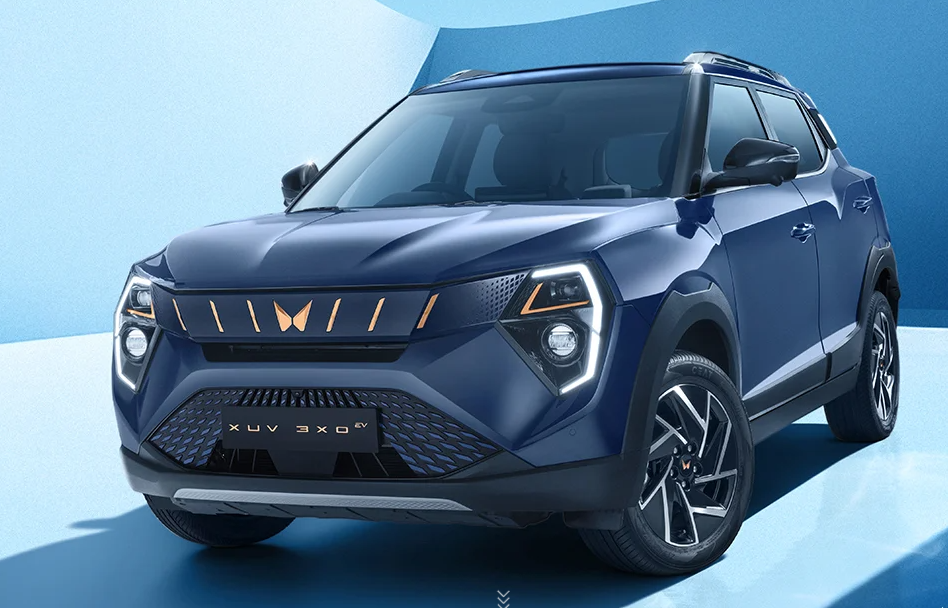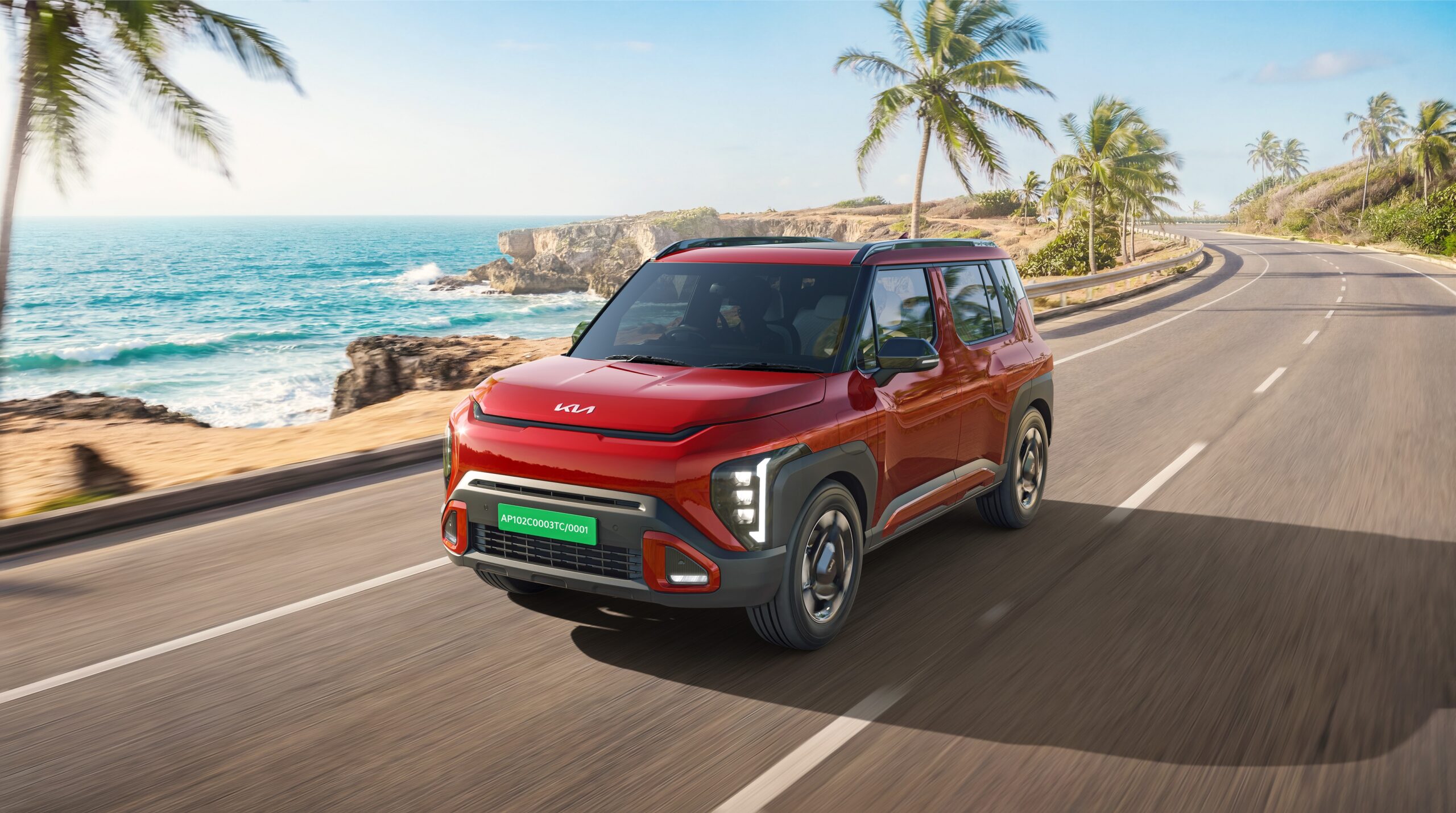
The Kia Syros EV is an all-electric entry level SUV competing directly against established segment models such as the Tata Nexon EV and the Mahindra XUV 3XO EV. Let’s look how hard it has to try to beat rivals.

Highlights
Dimensions: The Kia Syros EV is the tallest vehicle among the three (1,670 mm), while the Mahindra XUV 3XO EV features the longest wheelbase (2,600 mm) and widest body (1,821 mm).
Battery & Range: The Syros EV provides the largest battery options in this comparison (up to 51.4 kWh) and the highest ARAI-claimed range (up to 526 km).
Performance: The Syros EV offers the highest peak power output at 171 hp in its long-range variant, whereas the XUV 3XO EV produces the highest peak torque output at 310 Nm.
Pricing & Options: The Tata Nexon EV starts at the lowest price point in the segment (₹12.49 lakh), while the Kia Syros EV spans the widest price range (₹13.50 lakh to ₹20.00 lakh). Kia also offers an optional Battery-as-a-Service (BaaS) program to lower upfront cost.


Value and features: Key features like Advanced Driver Assistance Systems (ADAS), Vehicle-to-Load (V2L), and the Digital Key are restricted exclusively to the top-tier X-Line variant instead of being available on mid-high trims (like HTX+). Rain-sensing wipers are absent.
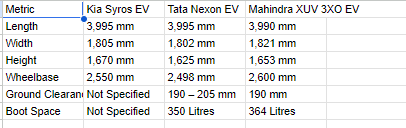
Overall Verdict: Ranging approximately between ₹13.50 Lakh and ₹20.00 Lakh (ex-showroom), the upper-tier trims (like the X-Line) overlap heavily with larger, segment-above EVs such as the Tata Sierra EV or Maruti eVitara. Although packed with features. As with most cars from the manufacturer, paying near ₹20 Lakh for a sub-4-meter vehicle can feel hard to justify. Kia’s best bet in the EV space is clearly with the Syros. This could actually work and take the Koreans, who are struggling in the market. However, with bigger EV’s now becoming more popular in Urban areas, we will have to see how the public responds to it too. Till the Nexon EV remains a great bet while the 3X0 is yet to show its true potential.