



Choosing the 2026 Honda Elevate over the Hyundai Bayon comes down to prioritizing true mid-size SUV proportions, cabin and boot space, rough-road capability, and long-term mechanical simplicity over a smaller, hatchback-derived crossover footprint.
While the Hyundai Bayon is styled as an urban crossover, its underlying architecture and dimensions are closely tied to the i20 hatchback, resulting in a narrower cabin and tighter rear-seat accommodations. The Honda Elevate is built on a larger mid-size platform with a 2,650 mm wheelbase and a boxy, upright roofline. This translates into noticeably better rear legroom, generous headroom for taller passengers, and a flat, well-shaped 458-litre boot that easily accommodates family luggage compared to the Bayon’s shallower 411-litre cargo area.
Segment-Leading Ground Clearance and Suspension Travel
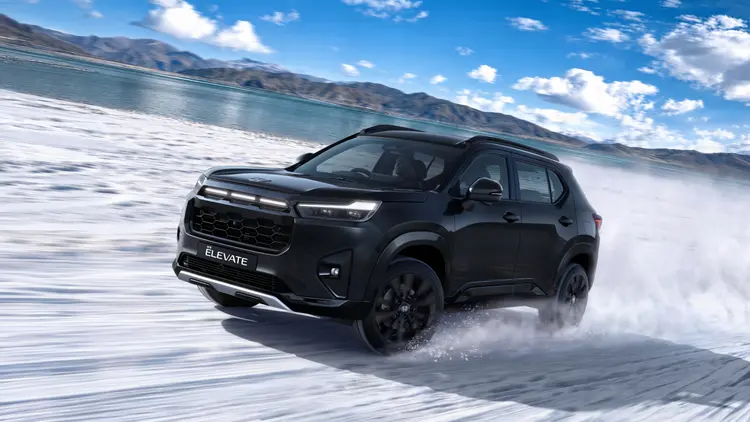
With 220 mm of unladen ground clearance, the Elevate sits significantly higher off the ground than the lower-slung Bayon. Combined with long-travel suspension tuned specifically to absorb sharp potholes, broken tarmac, and oversized speed breakers, the Elevate offers greater peace of mind during monsoon waterlogging and highway touring without the risk of underbody scraping.
Four-Cylinder Refinement and Proven Powertrain Reliability
The Elevate uses Honda’s well-established 1.5-litre, four-cylinder naturally aspirated i-VTEC petrol engine producing 121 PS and 145 Nm of torque. Unlike the smaller three-cylinder turbo-petrol engines typically found in the Bayon lineup, a four-cylinder naturally aspirated unit offers inherently lower vibrations at idle, predictable throttle response without turbo lag, and less thermal stress over high mileage. Furthermore, pairing it with a conventional CVT rather than a dual-clutch transmission (DCT) avoids overheating concerns and high clutch-pack replacement costs in dense, bumper-to-bumper city traffic.
Commanding Visibility and Ergonomic Simplicity
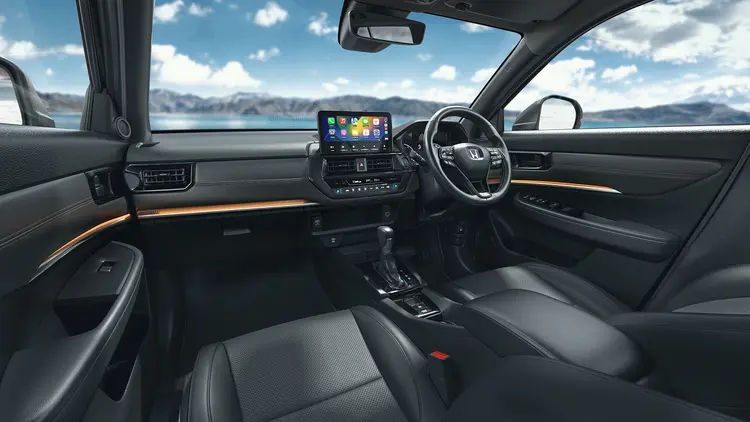
The Elevate features a higher seating position (H-point) and a flat, sculpted hood whose edges are clearly visible from the driver’s seat. This makes judging vehicle width and tight gaps much easier than in the Bayon’s more swept-back, coupe-like front profile. Inside, Honda retains straightforward physical switches and dials for essential functions like climate control, reducing driver distraction compared to touch-heavy layouts.
Key Feature Takeaways
Superior Cabin Trim: Richer tan leatherette upholstery and soft-touch dashboard padding give it a more upmarket, airy feel.
Camera-Based Left Blind-Spot View: Honda LaneWatch projects a live feed of the left blind spot onto the main screen when signaling or pressing the stalk button—very useful in dense left-hand-drive/Indian traffic.
Standardized ADAS Availability: Honda Sensing is available on both Manual and CVT versions of the top ZX trim, whereas Hyundai often restricts full ADAS suites to top automatic variants.
Wheels: The Elevate rides on 17-inch dual-tone diamond-cut alloys; the Bayon offers 16-inch or 17-inch dual-tone alloys depending on the variant.
Sunroof & Roof: Both models offer a single-pane electric sunroof, roof rails, and a shark-fin antenna.
Upholstery & Trim: The Elevate features tan and black leatherette seats with soft-touch dashboard padding, while the Bayon uses fabric or leatherette seats.
Seat Ventilation: Both models offer front seat ventilation on their top-end trims but Elevate offers rear seat ventilation!!
Seat & Steering Adjustment: Both provide manual driver-seat height adjustment along with tilt-and-telescopic steering adjustment.
Climate Control: Both come equipped with single-zone automatic climate control and dedicated rear AC vents.
Rear Seat Comfort: Both feature a 60:40 split-folding rear bench; the Elevate adds a rear center armrest with cupholders.
Smartphone Integration: Both support wireless Apple CarPlay and Android Auto.
Audio System: The Elevate is equipped with an 8-speaker setup (4 speakers + 4 tweeters), while the Bayon offers a 6-speaker system or an 8-speaker Bose premium sound system on top trims.
Charging & Connected Tech: Both include a cooled wireless charging pad. The Elevate runs Honda Connect (with smartwatch integration), while the Bayon runs Hyundai Bluelink (offering remote engine start, geo-fencing, and over-the-air updates).
Airbags: Both offer 6 airbags as standard across all variants.
ADAS Hardware: The Elevate uses camera-based Honda Sensing (available on both Manual and CVT top trims), while the Bayon uses radar- and camera-based Hyundai SmartSense.
Cruise Control: The Elevate includes Adaptive Cruise Control with Low-Speed Follow (on CVT), while the Bayon offers Navigation-based Smart Cruise Control.
Lane & Collision Tech: Both include lane-keeping assist, lane-departure warning, and autonomous emergency braking (with junction-turning detection on the Bayon).
Blind-Spot Monitoring: The Elevate uses Honda LaneWatch (a left-mirror camera displaying live video on the center screen), whereas the Bayon uses radar-based Blind-Spot Collision-Avoidance Assist covering both sides of the vehicle.

Predictable Maintenance Costs and Strong Resale Value
Because the Elevate avoids complex turbocharging hardware, mild-hybrid battery packs, or dual-clutch gearboxes, routine scheduled maintenance remains straightforward and economical over a 7- to 10-year ownership cycle. Combined with Honda’s strong reputation for engine longevity and the sustained market demand for mid-size SUVs over sub-compact crossovers, the Elevate is positioned to hold stronger residual value in the used-car market.
Let us know if you want to see a video on the same.

